


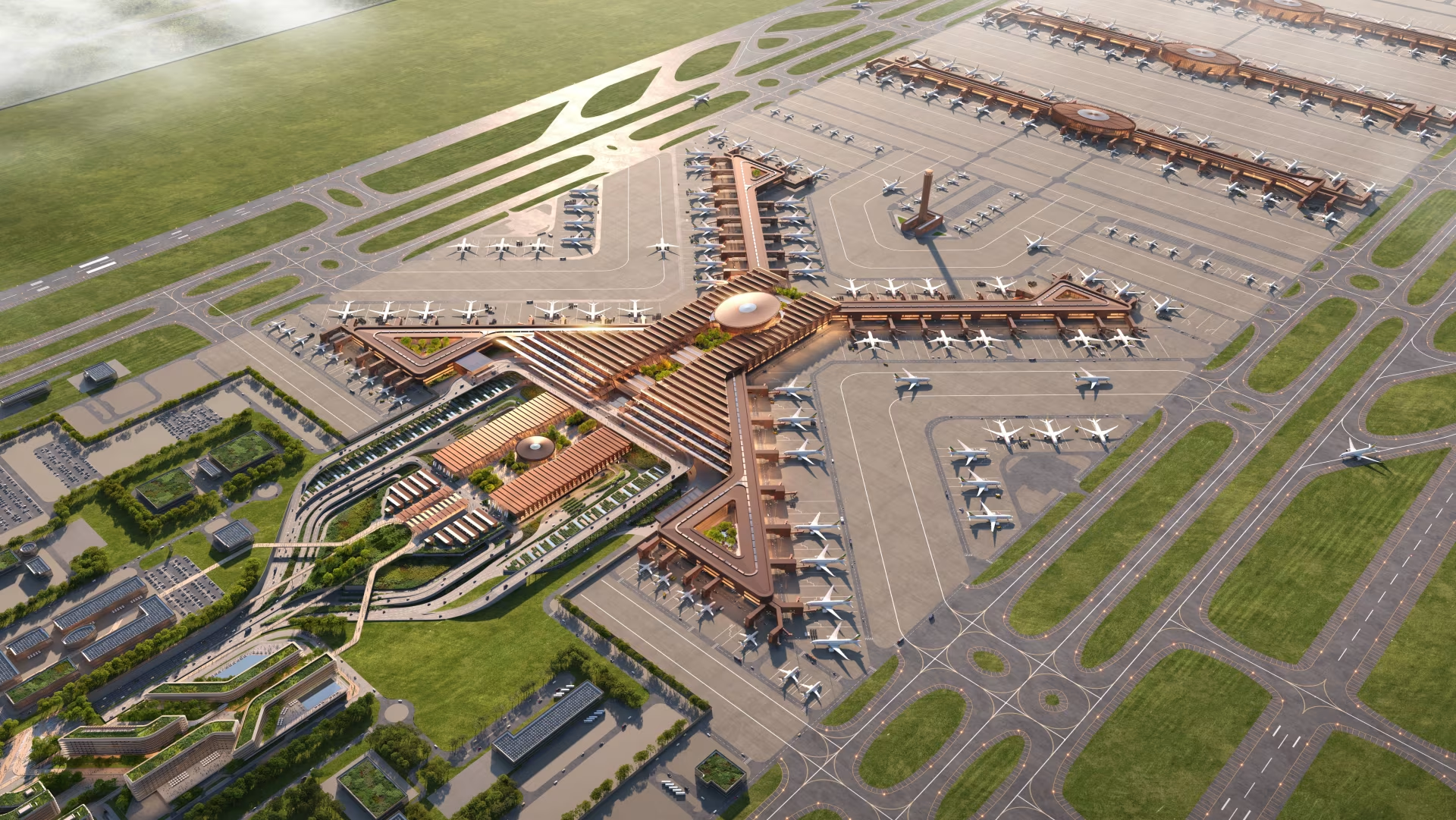
Air travel between African cities forces many travelers to transit outside the continent, via cities like London, Paris, or Dubai. But a new $12.5 billion airport under construction in Ethiopia could change that.
About 30 miles southeast of the capital, Addis Ababa, construction began last January on what Ethiopian Prime Minister Abiy Ahmed Ali has called “the largest aviation infrastructure project in the history of Africa.”
Bishoftu International Airport is scheduled to open in 2030, with two runways and a capacity of 60 million passengers per year, with plans to expand to 110 million passengers, a figure that surpasses the number of passengers at the world’s busiest airport, Hartsfield-Jackson Atlanta International Airport, which handled 106 million passengers in 2025.
The project is being led by Ethiopian Airlines, the state-owned carrier and Africa’s largest airline in terms of fleet size, passenger numbers, and revenue.
Addis Ababa is one of Africa’s major aviation hubs, but Bole International Airport, the airline’s main base, is rapidly approaching its maximum capacity with no room for expansion.
With the construction of a new airport focused primarily on transit flights, Ethiopian Airlines could lead the race to connect African skies, one of the world’s fastest-growing aviation markets.
The airport could also tap into untapped cargo capacity within Africa, supporting the African Continental Free Trade Area with infrastructure capable of handling 3.73 million tons of cargo annually.
