


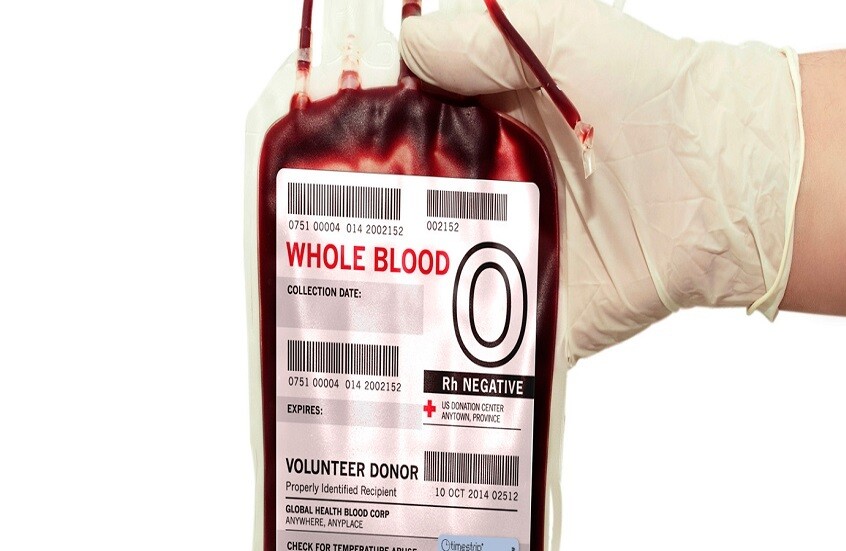
The Pentagon’s Defense Advanced Research Projects Agency (DARPA) has developed a blood substitute in powder form and is now seeking partners to continue testing it.
This was reported by the program director in an interview with Business Insider.
“We’ve had success in the petri dish in in vitro environments. Now we’ve also had success in animals,” said Robert Murray, a U.S. Navy physician overseeing the DARPA program. He described the new development as “a truly revolutionary technology.”
According to Murray, patients suffering from severe bleeding need large quantities of blood within minutes of injury, and field operations often face difficulties in obtaining this. Regular blood requires special storage and transport conditions, while the substitute powder is stored in sturdy bags that soldiers can easily carry and is mixed with saline solution just before use.
Scientists have been able to create artificial red blood cells containing hemoglobin, the protein that carries oxygen in our bodies. The particles are coated with a special polymer layer that prevents them from sticking together and allows them to accurately mimic the behavior of a living cell, namely, capturing oxygen in the lungs and delivering it to its destination. Unlike real blood, the shelf life of this powdered alternative is virtually unlimited.
Experts describe this new technology as a potential tool for future conflicts, where evacuating the wounded may be difficult. In a highly violent war, access to fresh blood will become one of the main challenges for military medics.
The technology will be moved out of the laboratory at a later stage. However, the path to its potential application by 2029 is still hindered by regulatory, production, and pricing obstacles.
According to the Russian newspaper Vzglyad, the US Defense Advanced Research Projects Agency (DARPA) plans to spend nearly $100 million on new developments in the field of military medicine.
Meanwhile, the Russian Ministry of Defense has begun using dried blood plasma to save critically wounded soldiers on the front lines. Russian military medics have also started using the domestically produced drug Capramine to effectively stop vascular bleeding.
Source: Rossiyskaya Gazeta
