


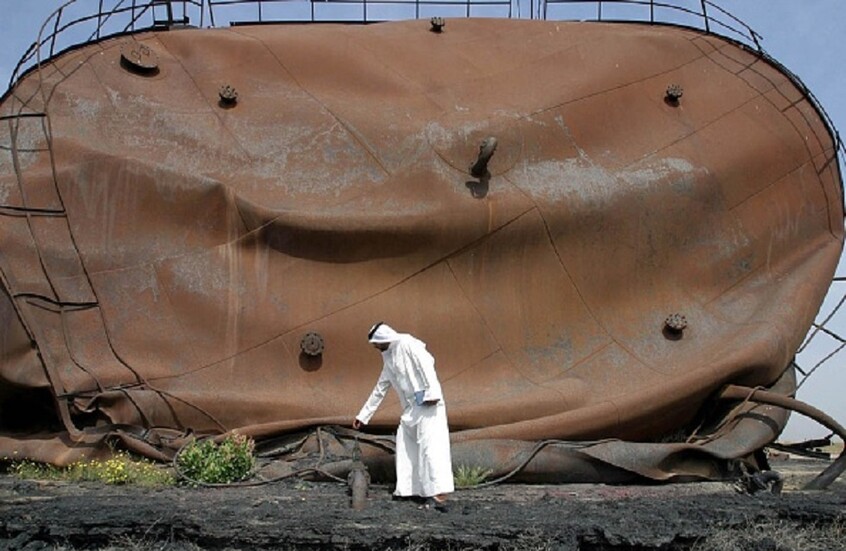
According to the ship-tracking platform TankerTrackers.com, Kuwait exported no crude oil in April, a first since the end of the Gulf War in 1991. TankerTrackers.com tweeted: “In April 2026, Kuwait exported zero barrels of crude oil for the first time since the end of the first Gulf War.”
It is worth noting that Kuwait, Qatar, Bahrain, and Iraq are among the countries most affected by the closure of the Strait of Hormuz, as they have few alternative routes to transport their oil to global markets.
Two Gulf States Await Major Gains from the Strait of Hormuz Closure, While Five Arab Countries Are Severely Affected
Two Gulf States Await Major Gains from the Strait of Hormuz Closure, While Five Arab Countries Are Severely Affected
This comes according to analysts at the American investment bank Goldman Sachs, who predict that Saudi Arabia and Oman will reap significant benefits from the closure of the Strait of Hormuz, while other countries, including the UAE, will be negatively impacted.
Meanwhile, the Iranian Revolutionary Guard Corps Navy announced the establishment of “special equations and rules” for the new management of the Gulf waters.
It is worth noting that a war between Iran, the United States, and Israel, which began on February 28, 2016, would cause a near-complete halt to navigation through the Strait of Hormuz, affecting global oil supplies and leading to a surge in energy prices.
In a related development, the Kuwait Petroleum Corporation announced tenders for 15 projects worth 190 million dinars amidst strong international competition.
