


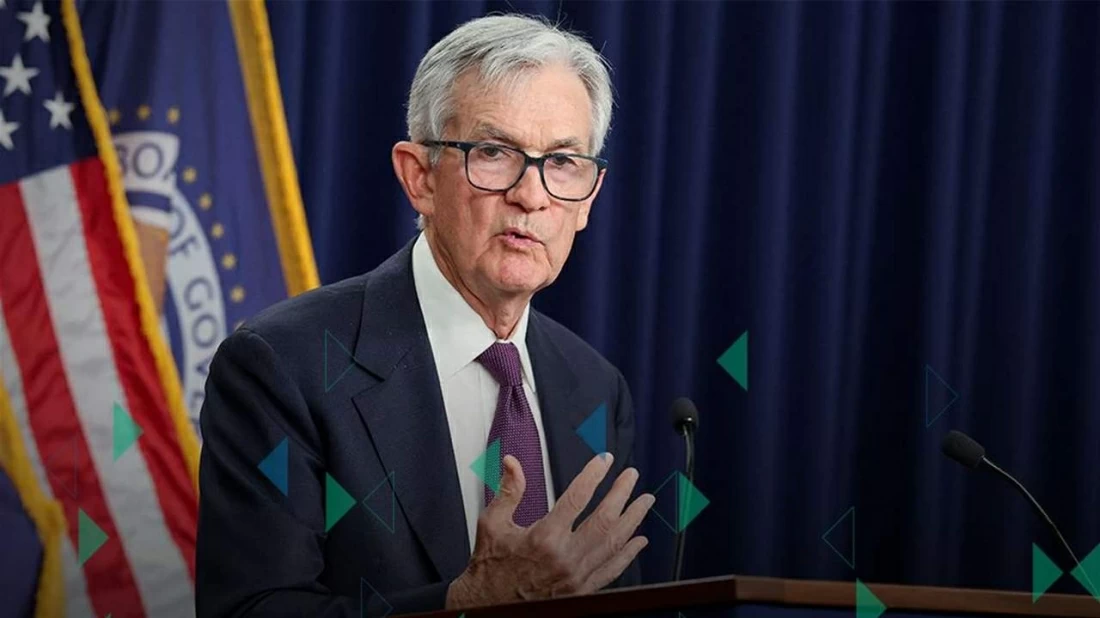
The US Federal Reserve enters its interest rate meeting this week with inflation expectations weighed down by persistently high energy prices and supply chain disruptions caused by the war in the Middle East.
This will be the last meeting for Fed Chairman Jerome Powell, following a tenure marked by tension with US President Donald Trump, amid concerns that US monetary policy will be influenced by the incoming Trump-aligned president.
Analysts expect Powell to end his tenure at the Federal Reserve by holding interest rates steady, amid concerns about rising inflation and the impact of the oil market turmoil on energy and industrial prices.
Ahmed Azzam, head of research and market analysis at Equity Group, told CNN, “The Fed may hold interest rates steady because markets are still in the midst of an energy shock, a crisis whose long-term nature remains unknown.”
This view aligns with the expectations of economists cited by Agence France-Presse, who anticipate the Federal Reserve will maintain interest rates at its meeting this week, given the continued rise in energy prices and supply chain disruptions caused by the war in the Middle East.
The FedWatch indicator shows a 100% probability of interest rates remaining unchanged at their current level of 350-375 percentage points, reflecting the prevailing forecasts.
Energy prices are putting pressure on US inflation :
The tone of the US Federal Reserve may be different at its current meeting, as the fear of accelerating inflation will likely dominate discussions.
Oil and gasoline prices remain high, especially after the repercussions of the Strait of Hormuz closure, which pushed inflation to 3.3% in March, its highest level in nearly two years.
With the war not officially over and negotiations between Iran and the US stalled, the Fed is likely to focus more on curbing inflation than supporting the labor market, given the continued pressure on consumers and businesses.
Ahmed Azzam says the Fed remains concerned about accelerating inflation and slowing economic growth, which could lead to stagflation in the markets. Therefore, it will prefer to hold interest rates steady.
He adds that the Fed will not leave the door open to cutting interest rates in its upcoming timeline, as it will wait for economic indicators to signal a stabilization of the economic situation before reducing them.
Federal Reserve after Jerome Powell
After months of back-and-forth between the Federal Reserve and Trump, the Fed meeting will be the last for Chairman Jerome Powell.
Since entering the White House, Trump has been pressuring Powell to cut interest rates to support economic activity. However, Powell has been cautious in his cut decisions, waiting for inflation to fall back to the Fed’s target and maintaining the central bank’s independence.
Kevin Warsh will assume the chairmanship of the Federal Reserve starting in May 2026. During his questioning by the Senate Banking Committee, Warsh openly defended the Fed’s independence and insisted that Trump had not asked him to commit to any interest rate decision, emphasizing that he would not agree even if asked.
The head of research and market analysis at Equity Group says that even with Warsh’s arrival, we may not see a radical change in the Fed’s policy, because the challenging economic outlook will be the driving force.
He adds that current economic indicators do not support any interest rate cut, as inflation is rising and economic growth remains weak, thus creating an unfavorable environment for a rate cut. Azzam expects the Fed, under Warsh, to undergo some changes in the coming period, potentially altering its economic data metrics and collection methods, but he believes monetary policy itself will remain largely unchanged.
In his extensive testimony before the Senate, Warsh presented a more precise and clear vision for reforming the Federal Reserve. He discussed addressing issues related to inflation data collection, the potential surge in artificial intelligence productivity, proactive policymaking, and a gradual reduction of the Fed’s massive balance sheet, which could create more room for interest rate cuts.
