


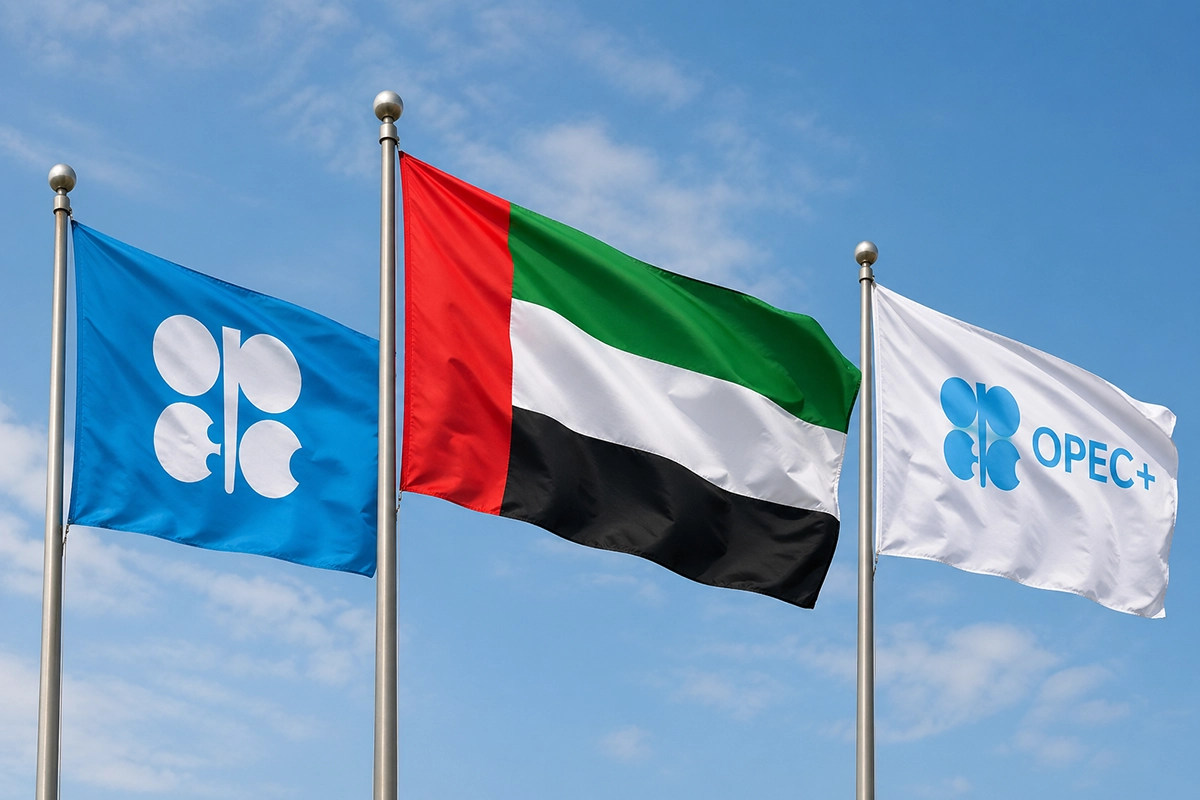
The United Arab Emirates announced on Tuesday its decision to withdraw from the Organization of the Petroleum Exporting Countries (OPEC) and the OPEC+ group, effective May 1, 2026, according to a statement published by the official UAE news agency.
The statement indicated that this decision “aligns with the UAE’s long-term strategic and economic vision and the development of its energy sector, including accelerating investment in domestic energy production. It also reinforces its commitment to its role as a responsible and reliable producer that anticipates the future of global energy markets.”
The statement added that this decision “follows a comprehensive review of the UAE’s production policy and its current and future capacity, and is in accordance with the national interest and the country’s commitment to contributing effectively to meeting the urgent needs of the market, while geopolitical volatility continues in the near term due to disruptions in the Arabian Gulf and the Strait of Hormuz, which affect supply dynamics. Fundamental trends indicate continued growth in global energy demand in the medium and long term.”
The statement noted that “the decision comes after decades of constructive cooperation. The UAE joined OPEC in 1967 through the Emirate of Abu Dhabi, and its membership continued after the establishment of the United Arab Emirates in 1971. During this period, the country played an active role in supporting the stability of the global oil market and promoting dialogue among producing countries.”
The statement added that after the UAE’s withdrawal from OPEC, it “will continue its responsible role by gradually and carefully increasing production, in line with demand and market conditions.”
The UAE affirmed its “continued commitment to responsible production policies focused on market stability, taking into account global supply and demand.”
OPEC comprises a group of major oil-producing countries and coordinates production policies to influence global oil supplies and prices.
This move represents a significant blow to the world’s largest oil-exporting organization and its largest member, Saudi Arabia. Collectively, OPEC produces 36% of global oil output and controls approximately 80% of the world’s proven reserves.
The United Arab Emirates has long sought to increase its OPEC production quota, reflecting its efforts to expand its production capacity beyond the levels set for it by the organization.
OPEC was founded in 1960 by Saudi Arabia, Iran, Iraq, Venezuela, and Kuwait. The UAE joined seven years later.
