


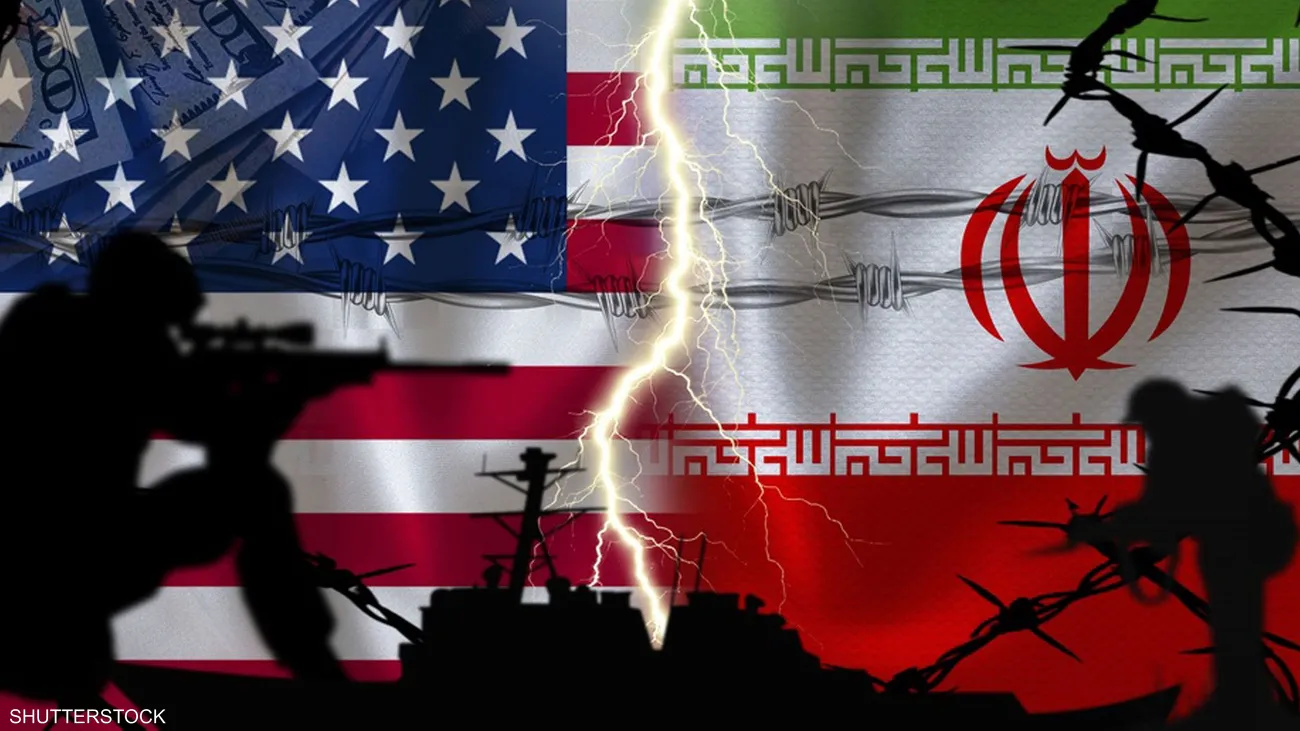
Iranian media outlets revealed details on Saturday of a 14-point proposal Iran has submitted to the United States to end the war.
The Iranian news agency Tasnim reported that the proposal consists of 14 points and calls for a permanent end to hostilities and a complete withdrawal of US forces from the region.
The agency stated that the plan was delivered through Pakistani intermediaries in response to a nine-point US proposal.
Tasnim noted that while Washington’s plan calls for a two-month ceasefire, Tehran is pushing for a 30-day timeframe to resolve key issues and insists that talks focus on ending the war rather than a temporary truce.
Iran’s demands include the withdrawal of US forces from areas near its borders and guarantees of non-aggression, along with economic measures such as lifting the naval blockade, releasing frozen Iranian assets, easing sanctions, and paying compensation.
The proposal also calls for an end to hostilities on multiple fronts, including in Lebanon, and the establishment of a new governance mechanism for the Strait of Hormuz. According to a Tasnim news agency report, Iran is awaiting an official response from US officials to the proposal.
A senior Iranian official stated on Saturday that Tehran’s proposal, which US President Donald Trump has so far rejected, calls for opening the Strait of Hormuz to maritime traffic and ending the US naval blockade of Iran, while postponing talks on the Iranian nuclear program to a later stage.
The Iranian official explained that Tehran believes this latest proposal to postpone nuclear talks represents a significant shift aimed at facilitating an agreement.
Under the proposal, the war would end with a guarantee that Israel and the United States would not attack the country again. Iran would open the Strait, and the United States would lift its blockade.
Subsequent talks would then be held regarding restrictions on Iran’s nuclear program in exchange for lifting sanctions. Iran would demand that Washington recognize its right to enrich uranium for peaceful purposes, even if Tehran agrees to suspend enrichment activities. On February 28, Israel and the United States launched joint strikes on Tehran and other Iranian cities, killing then-Supreme Leader Ali Khamenei and other senior commanders. Iran retaliated with waves of missile and drone attacks targeting Israel and several other countries in the region.
A ceasefire went into effect on April 8, followed by talks between Iranian and American delegations in Islamabad that failed to produce an agreement.
President Trump said on Saturday that there was a possibility the United States would resume attacks on Iran.
When asked by a reporter in West Palm Beach, Florida, about the possibility of resuming attacks against Tehran, Trump said, “There is a possibility that it will happen.”
The US president described the sanctions imposed by the United States on Iran as “very nice.”
Trump added, “I have been briefed on the outlines of an agreement with Iran, and I will be provided with the exact text.” He continued, “I will soon study the plan that Iran just sent us,” adding, “I don’t imagine that plan will be acceptable.”
Trump indicated that Iran “has been hit very hard, and it will need 20 years to rebuild its capabilities.”
