


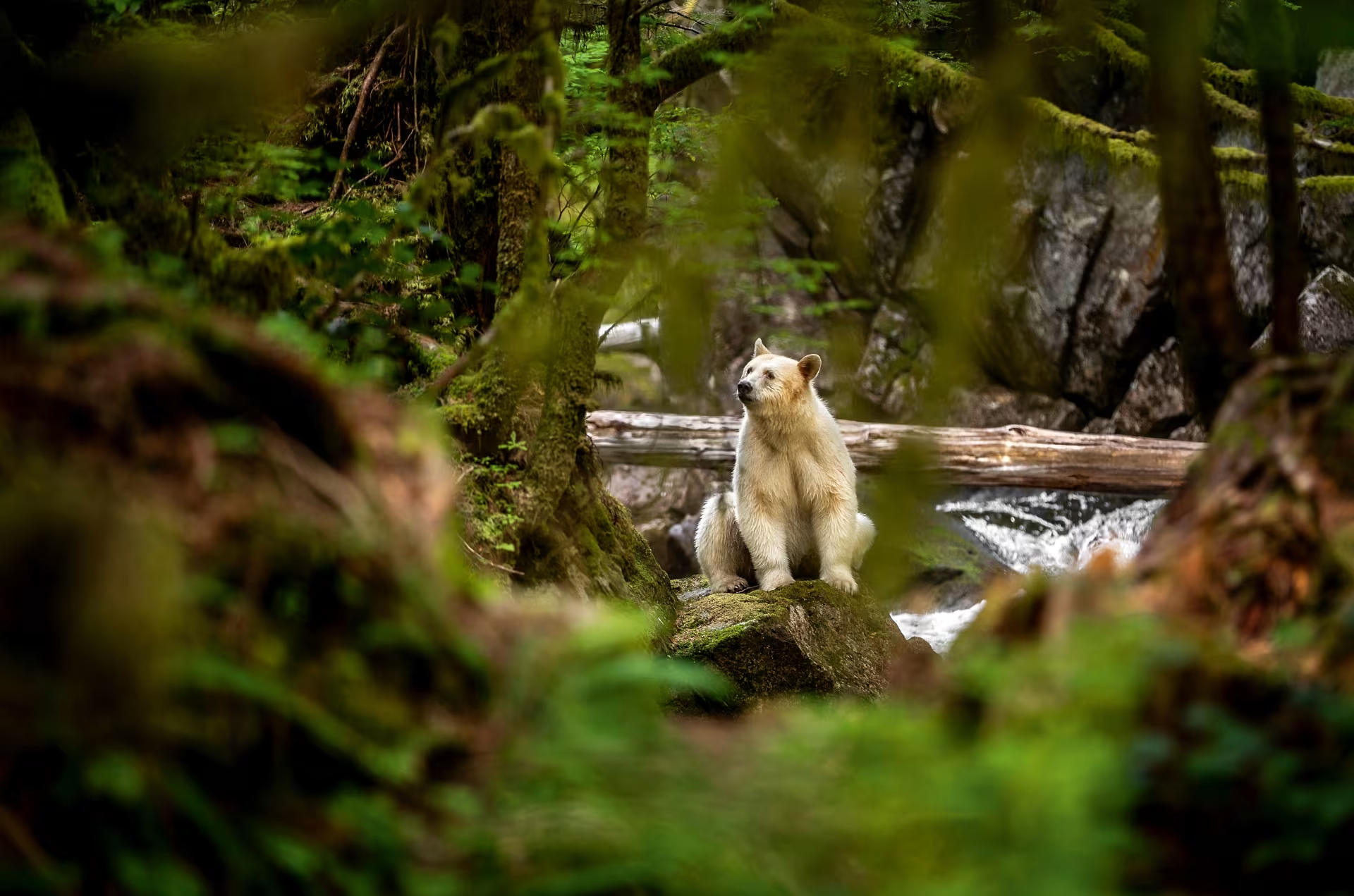
Spirit bears roam the rain-ravaged coastline of British Columbia, Canada.
These animals, also known as Kermode bears, are estimated to number fewer than 100 and are a subspecies of black bear with a distinctive pale white coat.
They inhabit the Great Bear Rainforest, a 400-kilometer stretch of Canada’s west coast, where they feed on salmon from the cold North Pacific and live far from human sight.
Spirit bears are closely linked (both culturally and practically) to their First Nations neighbors, including the Kitasoo Xai’xais, Gitga’at, and Heiltsuk.
Evidence suggests that humans were present in the Great Bear Rainforest as far back as 11,000 years ago.
The white bear appears in the totem poles, oral traditions, and dances of these peoples, as they share the same land and food sources for survival.
“It’s a mysterious creature that lives among them,” British photographer Jack Plant told CNN, though most members of the Kitasoo Xai’xais people have never seen one.
For the past decade, between spring and autumn, Plant has lived with the Kitasoo Xai’xais in Kleemto on Swindle Island.
Unlike many islanders, he has seen a significant number of spirit bears after venturing deep into the forest as a guide and photographer.
His adventures are captured in a new book, Spirit of the Great Bear, featuring 90 photographs of the forest showing spirit bears emerging from the dense vegetation, wading through water, and feeding on salmon.
These bears appear solitary, majestic, striking, and perfectly at home in their environment.
