


Tens of thousands of young children are injured each year by common household products that many parents don’t think to keep out of reach.
According to estimates published in a large, new study in the journal Pediatrics, more than 240,000 children under the age of five were treated in U.S. emergency rooms for injuries related to household cleaning products over a 16-year period.
Young children are especially vulnerable because they can’t read or understand warning labels, but the steps parents and caregivers should take to keep children safe are simple and straightforward.
CNN’s certified health expert, Dr. Leana Wen, shares her guidance.
Wen is an emergency physician and associate professor at George Washington University. She previously served as the Baltimore Health Commissioner.
CNN: What did this study find about injuries related to household cleaning products?
Dr. Leana Wen: This study analyzed 16 years of national emergency department data, from 2007 to 2022, focusing on unintentional injuries in children under five.
Researchers used a federal surveillance system that tracks injuries related to consumer products across the United States.
They estimated that 240,862 children were treated in emergency departments for injuries related to household cleaning products during that period.
The majority of these cases, about 60%, involved ingestion, meaning the child swallowed the product. Approximately 40% of cases resulted from contact, and a small percentage, 1.2%, were due to inhalation.
CNN: What types of cleaning products are most commonly associated with these injuries?
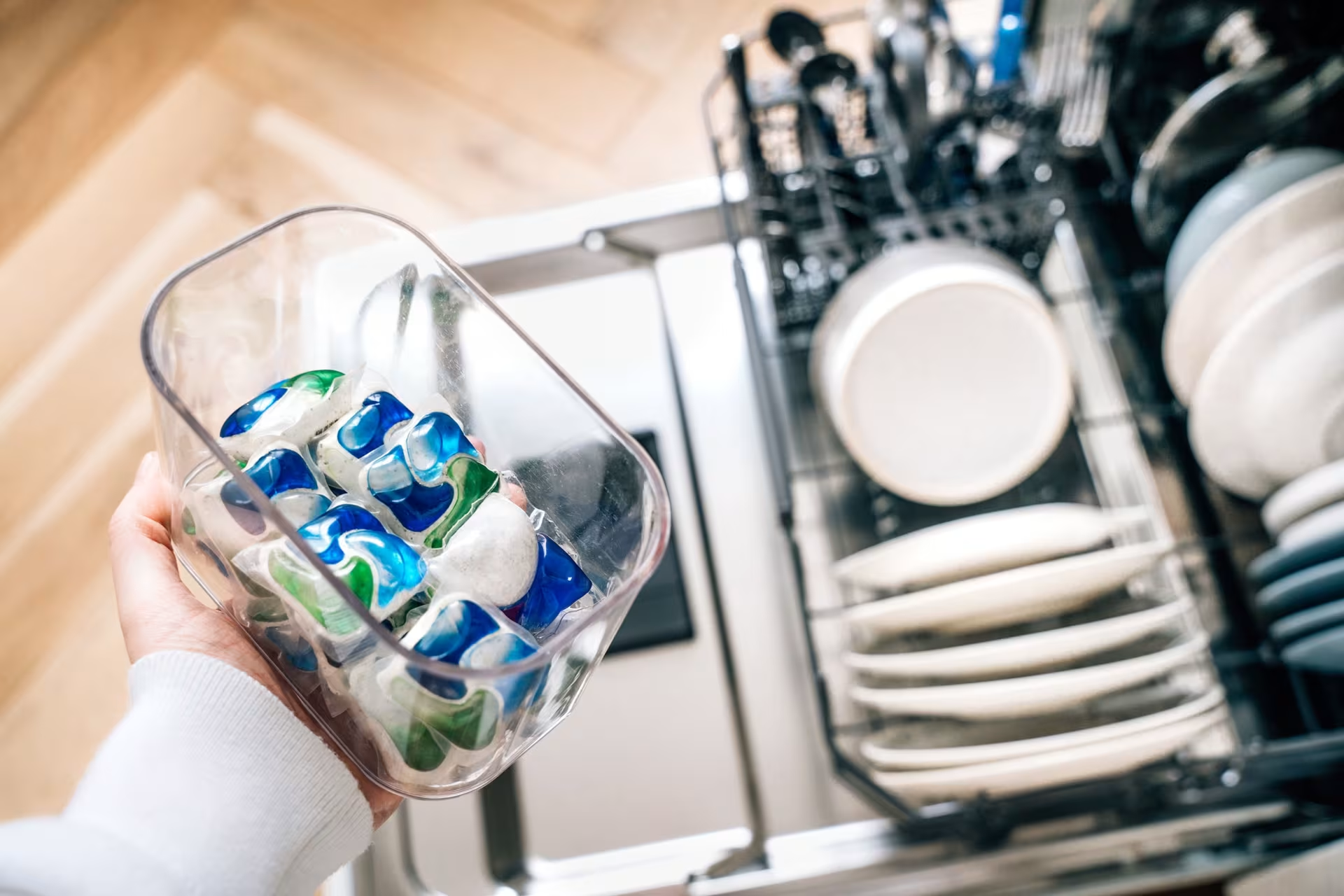
Wen: Two types stand out in particular: bleach, which accounted for about 30% of the injuries, and laundry and dish soap, which accounted for about 29%. In terms of packaging, small detergent pods were linked to about a third of the injuries, and spray bottles to slightly more than a quarter. Other packaging, such as open bottles or containers, accounted for a smaller but still significant percentage.
Chlorine has remained a consistent source of injuries over time, partly due to its widespread use and the fact that it is sometimes stored in places easily accessible to children. Detergents are also a major contributing factor, especially with the advent of concentrated products like laundry and dishwashing pods, which are small, brightly colored, and resemble candy, making them appealing to young children.
CNN: What types of injuries are most common, and how serious are they?
Wynn: Poisoning accounted for about 64% of diagnoses. Other common injuries included chemical burns (about 14%) and skin or eye irritation, including dermatitis and conjunctivitis (about 11%).
About 7% of the children in this study required hospitalization. Of these cases, approximately 84% were due to ingestion, and nearly half of the children hospitalized were one year old or younger.
These figures suggest that injuries linked to household products can be very serious. These substances are designed to break down grease and stains and kill bacteria—the same properties that can damage body tissue.
It’s also important to note that the findings do not include children treated at pediatric clinics or urgent care centers, meaning the total number of cases linked to exposure to these products is likely much higher. Researchers reported 90,000 calls to poison control centers related to these products in 2023 alone.
CNN: Why are younger children, especially toddlers, more at risk?
Wynn: Children at this stage are active, curious, and constantly exploring. They use their hands and mouths to interact with their surroundings and haven’t yet developed the ability to recognize danger.
They also can’t read labels or understand warnings.
This combination of curiosity and a lack of awareness of the danger makes this age group particularly vulnerable.
CNN: What role do modern products like cleaning pods play in these injuries?
Wynn: These pods appeared just over a decade ago and quickly became a leading cause of injuries. The rate of injuries associated with them rose rapidly after their market launch, peaked several years later, and then declined somewhat, perhaps due to improvements in packaging such as child-resistant containers or packaging with a bitter taste or that dissolves slowly.
However, these pods remain a major cause of injuries because of their size, color, and high concentration.
CNN: Should cleaning products be treated with the same level of caution as medications and alcohol?
Wynn: Absolutely. Cleaning products should be treated with the same level of care. The problem is that many people don’t perceive them as equally dangerous because they are used daily and are sometimes left unattended on surfaces or in the kitchen or bathroom. This study highlights the need to change this behavior.
CNN: What are the most important steps parents and caregivers can take to prevent accidents?
First, safe storage. Cleaning products should be kept in high places, out of sight of children, and ideally in locked cabinets. It’s important to replace them immediately after use and never leave them uncovered, even for a short time.
Second, keep products in their original packaging. Transferring them to other bottles, especially food or drink containers, increases the risk of a child thinking they are safe.
Third, choose products with child-resistant packaging whenever possible, as this adds an extra layer of protection.
Fourth, talk to children about the dangers of these products. Young children may not fully understand, but older children can learn and help protect their younger siblings.
Finally, the poison control center number should be readily available, and it’s advisable to call it immediately if you suspect exposure. Don’t wait for symptoms to appear, as prompt intervention can make a significant difference in the outcome.
