


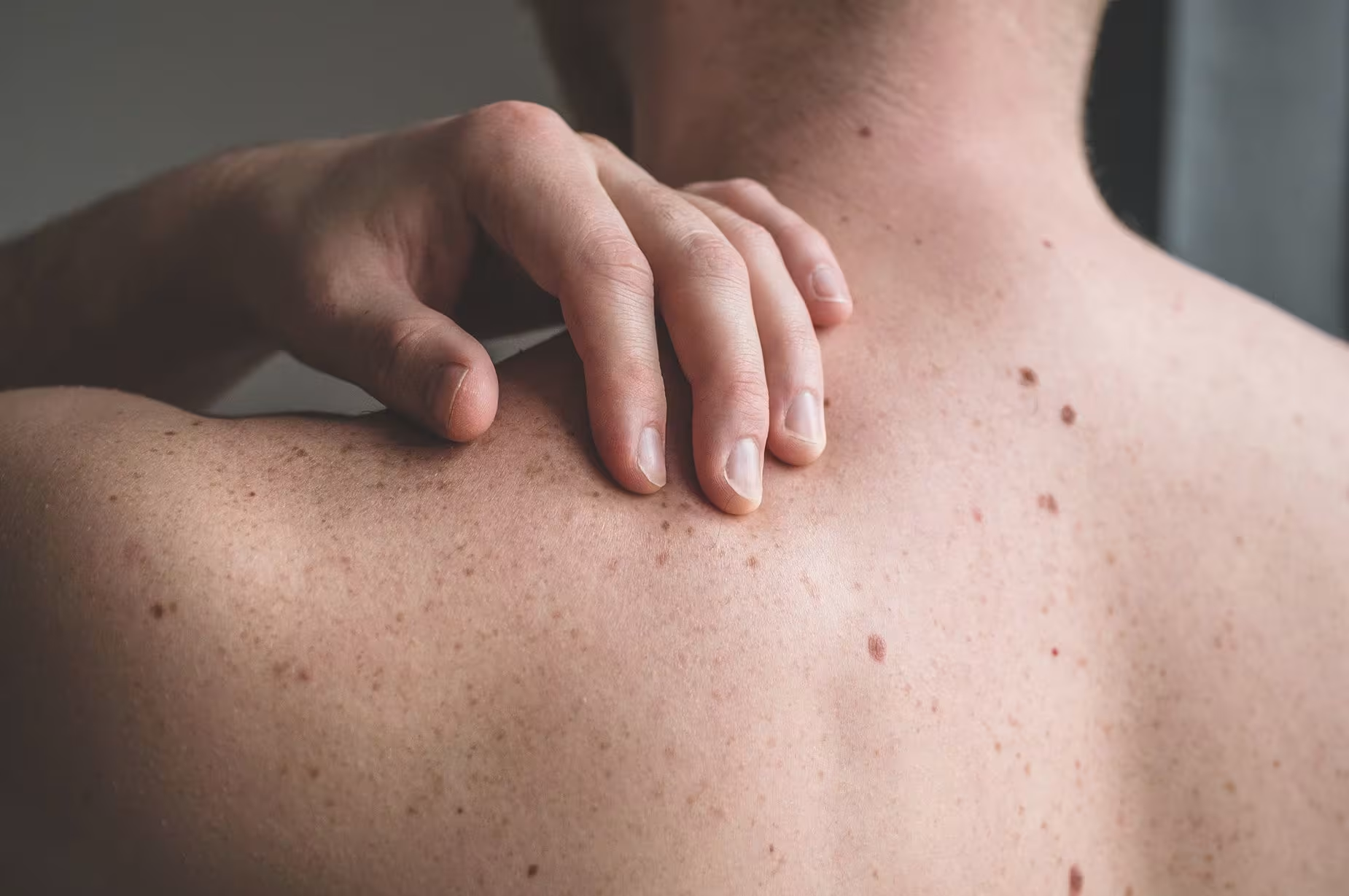
Burns can be caused by prolonged exposure to high temperatures or sunlight, chemicals, electricity, friction, or hot water and steam.
The Australian website Healthdirect notes that burns can damage the skin or the underlying tissues. The severity of burns ranges from minor injuries to life-threatening emergencies, depending on the depth and extent of the burn.
A superficial burn, also known as a first-degree burn, affects only the outermost layer of skin. A partial-thickness burn, also known as a second-degree burn, damages the first and second layers of skin. A full-thickness burn, also known as a third-degree burn, reaches the fat or muscle layer beneath the skin.
The website advises calling an ambulance or going immediately to the nearest emergency room if the burn is deep, affects the face, hands, or genitals, results in brown, black, or white spots on the skin, or is caused by chemicals or electricity.
What should you do while waiting for an ambulance?
It is important to first remove the source of the burn:
If someone has a burn, they should lie down and be covered with a blanket to help extinguish the flames.
If the burn is caused by electricity, the power should be turned off if possible and safe.
If the burn is caused by chemicals, any contaminated clothing should be removed, and the affected area should be washed with water.
If the burn is caused by dry chemicals (powdered chemicals), it is essential to remove these substances from the body to prevent further damage.
The website also indicates that it is crucial to expose the burned area to cool water as quickly as possible for at least 20 minutes and up to 3 hours.
It is important to avoid the following:
Applying ice directly to the burn.
Applying any type of lotion or cream to the burn.
Removing anything stuck or attached to the burn.
Removing any blisters that may form, as this could lead to infection.
It is advisable to cover the burn with a light, loose, non-adherent dressing. Adhesive, transparent plastic wrap is a good option; however, plastic wrap should not be used if the burn is on the face.
How can burns be treated?
All burns should be exposed to cool water for 20 minutes as soon as possible.
Superficial burns usually heal within 3 to 6 days. If the burn is free of blisters or skin cracks, aloe vera gel is the best treatment.
Deep partial-degree burns usually heal within 1 to 3 weeks, but medical attention may be necessary in the following cases:
If the burn is approximately 3 centimeters in diameter.
If blisters appear at the burn site.
If the person is concerned about the burn.
A doctor may recommend pain medication or the use of medicated dressings.
Third-degree burns can take months to heal. If the burn covers more than 10% of the body, or 5% of a child’s body, urgent medical care is essential, as treatment will likely require hospitalization and possibly skin grafting.
Large or deep burns can also become infected, leading to sepsis or skin tissue inflammation. These severe burns can lead to hypothermia, especially since the skin normally helps regulate body temperature.
